

Abbess Of the Abyss

Written By: Ian Berling | *A Note on the following text as supplied by Karl Weatherby, P.H.D, Dean of Anthropology at Bingham University and assistant curator of The Bingham University Library of Anthropological Research:
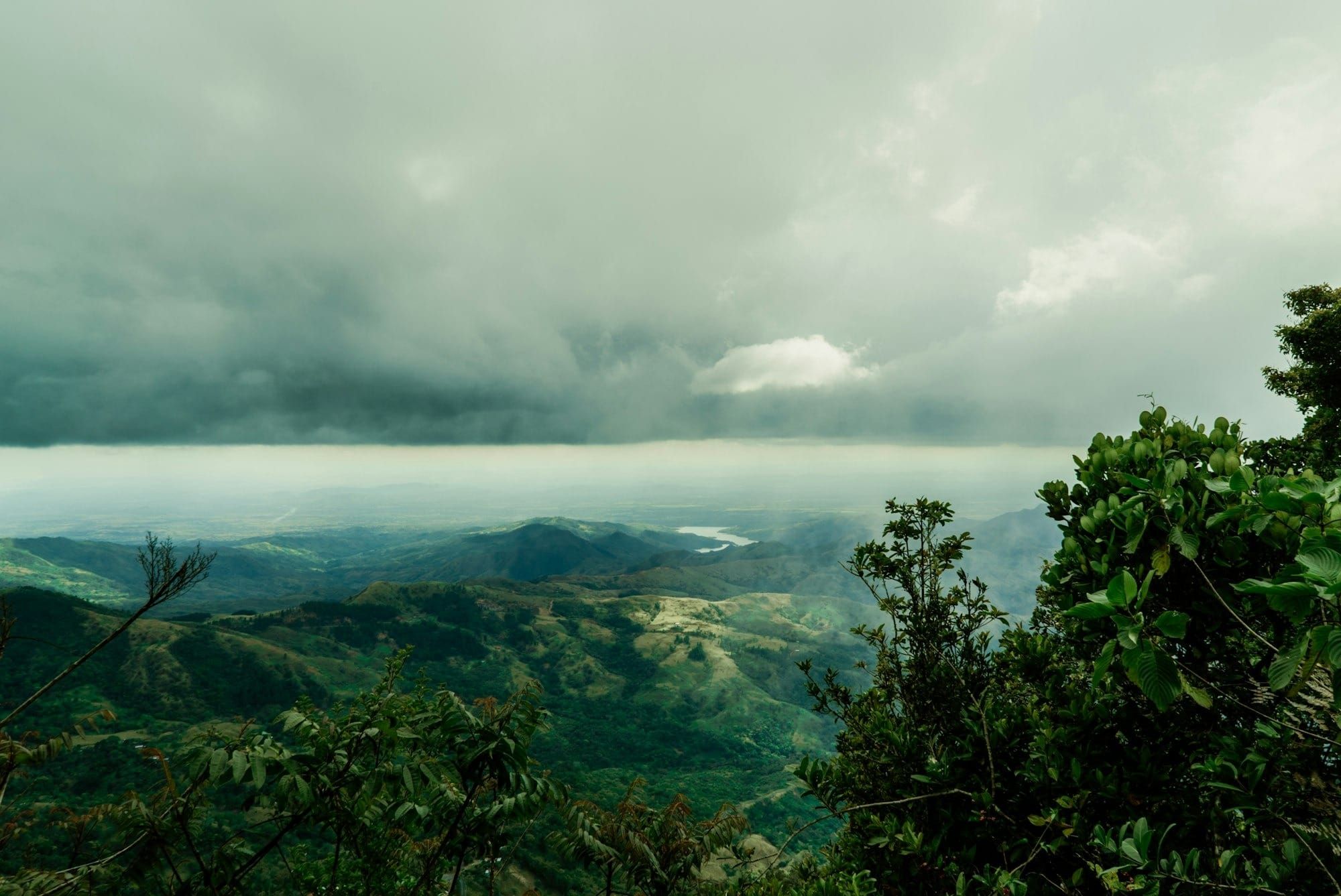
Written By: Ian Berling
*A Note on the following text as supplied by Karl Weatherby, P.H.D, Dean of Anthropology at Bingham University and assistant curator of The Bingham University Library of Anthropological Research:
The writings in which you hold in your hands are excerpts and extracts from the recently uncovered journal of Professor Wilma Markham, the distinguished Professor of Archaeology and Anthropology and author of Archaic Panama: A Catalogue of Known and Debated Prehistoric Religious Iconography, one of the most prestigious works in the field. One of our most respected Professors, who sadly, as you without a doubt must be aware of, notoriously disappeared while in the field somewhere east of the Rio Balsas in 1952, during an expedition funded by Bingham University. The goal of theirs was to uncover any remaining evidence of a lost city in the mountainous jungles of inner Panama, a city which according to local folklore, was partially swallowed in a massive earthquake at some point in the relatively distant past. Her journals were recovered at an abandoned and partially ransacked encampment deep in the Darien Gap, an encampment whose exact location, most regrettably, went unrecorded. While most of the text was rendered illegible due to extensive water damage, a portion of the journal was indeed recoverable.
These legible portions are compiled and partially reconstructed here inhopes of answering questions as to Professor Markham’s fate. That these entries raise many more questions about her mental state, stress levels and her possibly compromised rational decision making capacities and these questions are left to the best judgement of the reader. These writings are, as far as can be known, unsubstantiated and should not be taken as fact in and of themselves. Our committee feels that it is their responsibility to preserve these papers, rather than repress them. An interesting footnote to consider: the various other members of her team, including fellow Anthropology Professor Peter Ostermann, were located alive and well living in Rural Panama, either unwilling or unable to answer any questions beyond to clarify that the esteemed Professor Markham had wandered off in the night, and that despite multiple searches, was not located. Not a single member was willing to return to America, in Professor Ostermann’s case, not even to his wife and children. I hasten to add that I have been lucky enough to have had the honor to study under Professor Wilma Markham, and considered her a dear friend. She was one of the most impeccably admirable women of this or any scholarly line. I hope, truly, that this stain on her honor will not take away from her remarkable contributions.
-
Karl Weathersby, Dean Of Anthropology
May 27th,
Tuciti, Panama
Our arranged meeting with Romaldo changed everything. Ostermann hadn’t believed me from the start, I could sense it. At the airport shortly after landing, he’d even had the audacity to take me aside and ask me, rather sternly I might add, if I’d truly planned on presenting my new theories and arguments publicly as a book. He actually seemed appalled by the idea, can you imagine? I told that fellow that the evidence would do more than simply speak for itself. It’s amusing to see how little this “highly respected” man seemed to actually know, but I must remind myself to be a little more forgiving of his ignorance. He’s never been south of the border before, and he at the time could not, or simply would not be willing to recognize that in certain parts of the world, ancient cults still exist, untouched by time and the outer, “greater” world around them.
Or that old, impossibly, insanely old magics, could and do still exist in these most rural and forbidden areas. Romaldo is an elderly man, living in a small hut just outside the Tuciti township, we’d tracked him down from information provided by our bartender the night prior. You see, Romaldo had a story. A personal and deeply disturbing story. One that it seems may prove vitally important to this expedition.
Later the same day,
Tuciti,
Shortly Before Sunset We left the group at the hotel bar and rode out in our Jeep, just me and Ostermann. Out through the quiet, winding roads of Jungle encroached Tuciti. The town's cultural peculiarities did much to make us feel out of place and hindersome under fervent gazes. The town itself was an eclectic mixture of old world, rustic and the occasional glaringly modern buildings. Not many people seemed to be out in the streets and Ostermann acted unbearably put upon for most of the ride, complaining and causing a general inconvenience at a moments notice. Outside of town the road narrows and winds around thick, lush jungle, foliage expansive and increasingly oppressive encroached us on both sides. At last, after seemingly hours (a mere 45 minutes according to my watch) we approached a patch of unnaturally dry and arid ground. A ruined barn sat before us at a crossroads and it looked most spectacularly like something out of one of Father’s westerns. This was our landmark, we took a right, as indicated by the directions.Within moments of passing that plot of dead dirt and clods we reentered the jungles and came into view of Romaldo’s small, dilapidated shack, grim and moss enshrouded against the surrounding vegetation. It was noticeable mainly by a small door, leaning haphazardly and gently rocking in the light breeze. Despite the denseness of the trees around us, there remained a sense of stirring in the air, of restless winds of unknown and unholy origin. The lawn, if that was what we were to call it, had been absolutely reclaimed by overgrowth, thick with vines snaking about maliciously. The foliage was dark as night, and amongst the trunks sat an unshakable feeling of unease, as though the vegetation had watched and judged, and subsequently found us lacking in some vague area. Distantly, I recognized an overgrown tire swing, and shuddered at the horror that came with the unbidden thought of growing up in a place like this.
Romaldo, or, as i’d thought of him in the moment, That Gaunt Old Man in the Window, had been watching us this whole time, finally shifting his rocking chair into view of the window, resplendent as it was bedecked in grime, the back spiked with arcs of mottled greenish yellow mold. His visage, leering through the window, head propped up in the bottom corner, is one that will haunt me for years to come. He looked positively mummified! His eyes were sunken and deep, his skin wrinkled, yellowed with age and tobacco. His teeth, the few that remained, were crooked, chipped and broken. These as well as his gums were colored a sickly conflagration of yellow, coffee brown and pitch black. He’d shambled up to the open door, and had beckoned us forward with a hand like gnarled oak.
At the doorway Romaldo had croaked to us, positively, gutturally CROAKED at us, saying, “I know who you are, and I know why it is that you have come. Now sit with me, quickly, quietly now, and I will tell you all that you need to know, for a price of course”.
He was right too, I suspect and for the small, one time fee of Fifty Dollars, American Money Only Please, me and Ostermann settled on a bare bench on Romaldo’s sagging front porch, both bench and porch seemingly remaining intact and supportable through the tenacity of pure spite itself.
Romaldo, with great effort, sweating and swearing, dragged his rocking chair up to the doorway and with a bone jarring crash, dropped himself into the seat, causing his head to bobble even more uncontrollably for a brief moment. He’d sat back, quiet as can be, for a length of time one would describe as “an uncertain amount of minutes”. He worked his eyes, sizing us up, looking at us with his head cocked this way and that, not unlike a skin cloaked condor or some similar abhorrence. He let thesilence settle, first awkward, then lingeringly unpleasant. Moments before the atmosphere became most dreadfully hostile however, Romaldo pulled out a pouch of tobacco and produced from it a few loose rolling papers.
“I’ll be lucky to see these things be the death of me”, he’d said to no one in particular, chuckling softly to that non-entity on the porch with us.
Once more out of his pouch he produced a loose match and struck it against the rough, dry wood of the door, lighting his smoke and waving out the match in a fluid motion, one surprisingly agile for such a decrepit, hideous creature.
“You’re lucky you’re not out alone.” He’d directed at me, head nodding in disapproval.
“The ladyfolk around these parts, young and old, maternal and freshfaced alike, are scared. They do not leave their homes. They dare not go outside. This is because they disappear. They disappear on the roads, in their yards, at their jobs and at the grocery store, sometimes even with their children.” Here he smiled miserably, the corners of his mouth sharply upturning in a manner most wicked.
“Well, where do they go?” I’d asked, both as a curiosity and as a sort of hesitant ice breaker.“I know where some go. Oh yes I do. But most of them I can only guess.” He puffed on his cigarette harder than ever at this statement. His eyes began to carry an uncanny glow to them, a certain unhealthy fire.
“In this area, those of us who have lived here long enough know of a group. A religious sect, deep in the Jungles. Where once sat a great stone city that it is said had vanished into a crack in the earth one day, as a punishment for sharing, writing and spreading secret, forbidden knowledge that was deemed “too hideous to be known by mortal man”.
Stricken from the world itself in scorn. They still exist, deep in the jungles. I know of this cult. I know where this city once sat, and I, Romaldo know the secret of the cult. Yes, yes I do! I know that they still worship untouched, and I know two things of greater importance than all others in this matter.”
“Yes, tell us what it is you know, it could prove invaluable” I’d said, trying to signal to Ostermann with my eyes to hurry up and take his notes.
“If the information is strong, we will return with even more money for you.”
“Well” Romaldo had croaked, or sputtered more like, “I know where the cult keeps an Idol around here. A thing of great evil. It is said in town that this statue can be used by the cultists and they somehow create and maintain contact with the minds of people in the area. Telepathically. They are especially effective at contacting the minds of Psychics and fortune tellers and witches and those of that kind. They can implant ideas in their mind.” His voice had risen now, and began to crack with bitter passion. “
Ideas like leaving their families. Ideas like stealing their own daughter in the night and taking her TO THAT CREVASSE, that hellish, bottomless crack in the earth and never ever coming back.” Here he had thrown his cigarette butt away and pulled an ancient, weathered pen and a stained, but blank piece of paper out of his shirt pocket.
“I’ll draw you a map even. Seeing as I can tell that you don’t believe poor, old Romaldo” This he had began doing almost immediately, with broad strokes, an unpracticed hand doing its best to convey meaning to this blank sheet.
“This will take you to the shrine.” He’d said gloatingly, handing over the paper. “And this, this one will take you to the crevasse, far out past the Quebrada San Isidro. ” He’d said, handing over another piece of paper that he’d already had prepared. This one was a map as well, however the edges were littered in crabbed, spidery handwriting in Spanish along with what seemed a mixture of Christian symbols and a few unidentifiably sloppy runic scratchings.
We’d given our thanks multiple times over, Ostermann’s eyes lighting up as he began to fully realize that we may have just been handed a map to one of the greatest Anthropological discoveries of this century, regardless that it seemed to lead directly to the mountainous foothills in the notoriously unexplored and uninhabited Darien Gap region.
Romaldo had at this time looked up at us suddenly, his eyes aglow with the fires of hatred.
“They took them from me, you know? My wife and my wonderful daughter. I came home from work and they were gone! Clothes still in their closets, food untouched, goddamned cat unfed! They have them, the dirty fucking cultists. Either they were lured away, or they ran from me. I believe the cult has them, one way or another.”
Here had paused briefly, scanning the shadows before resuming, hushed now and crouched forward conspiratorially.
“But. I know how to stop them from doing it again. From taking others like they’ve taken mine. I’ve beaten them at their own game, the fools. Yes. I go into town sometimes, and I find the young girls, the ones with dreams in their eyes. I take them, and I kill them. They must die, you see? It keeps their minds and the souls pure and safe from the cultists.Otherwise there is no possible way to know that they cannot be taken. I am sparing their souls, it is good for them… is it not?”
Me and Ostermann shared a look of disbelief, astonishment and horror. He signalled that we should be departing here and it was hard not to immediately flee to the relative safety of the jeep. We had stood and began making our excuses when we were suddenly interrupted by the sound of engines. Many of them. A sound most unusual in this part of the outskirts. Much to our dismay, a group of armed youths pulled up on beaten up, second hand motorcycles. They filed in and once all parked and dismounted, came towards the house. By this point Romaldo had fled back to the safety of his home, slamming and bolting the precariously perched door. Ostermann and I turned to them with arms extended above our heads. The leader of the group had demanded of us in rough Spanish a number of rapid questions, each punctuated with a jab of his egregiously rusted rifle. Answering to the best of our ability things like who we were, why we were here, whether we knew Romaldo and of his deeds. After answering these to the best of our ability, we were allowed to depart, having been given a stern warning to “not turn around” and to “tell no one of being here”.
I had watched through the rearview mirror as we drove off. I watched the mob pull Romaldo out of the cabin. I watched them place a rifle to his temple and pull the trigger. I was glad for it. I do not know if Ostermann witnessed the shooting as well, although there was no way he could’ve avoided the sound. I believe they must have lit the house on fire as well, judging on the distant glow behind us. Tomorrow, the expedition will begin to make its way to the shrine. It seems like the perfect thing for a chapter in my tentative book, if it exists. If Romaldo wasn’t lying, or delusional.
May 29th,
The Shrine,
An alleged dozen miles from the Quebrada San Isidro,
It truly is something remarkable. Something completely and utterly out of the ordinary. Something that should not be here. This statue or shrine absolutely should not exist as it does. It is carven of a single massive hewed lump of black basalt, and it is old. Old beyond counting, and if my early analysis proves correct, it is something from far before the dawn of mankind itself. It’s carven, loosely in the shape of two vaguely humanoid figures. Figures that are absolutely closer to animals than to humanity. The proportions are beyond abnormal, with legs and arms far too long. A head far too tall and conical, bodies covered in hair from head to toe. A mother, clutching an infant to her chest. Head held up high, with a look of mixed awe and serenity upon her face. The figure was covered in what I had first mistaken as vines, carved meticulously and beautifully adorned with either leaves or feathers. It wasn’t until a closer inspection that I'd understood that these were in fact tentacles occasionally shaded in scales in sections, breaking up from the ground and ensnaring the woman.
Encircling her chest and limbs, weaved around the child figurine's head like a tiny fleshy crown of thorns. Baffling. Bewildering.
A find truly on par with the likes of the recently published translation of certain excerpts of the Book of Iod. Absolutely unheard of in terms of vastly controversial data, outside of something like the stupendous Copeland Bequeathment that went public but a few months prior. The quality, intricately stylized iconography and workmanship are outstanding, simply unlike anything made by human hands. There is certainly nothing stylistically similar to it in all of Peruvian history or prehistory.
We’ve set camp here for the time being while me and Ostermann continue our studies, and the students are getting great field experience, we’ve even had them dig a few preliminary trenches. I feel somewhat uneasy about sleeping near such an uncanny creation however. It is a vastly eerie thing to behold.
The air has become thick with tension within camp I daresay, and our guides seem most uncomfortable, being the poor, overly imaginative types that they are. They have, among other things, also alerted us to a small, almost totally overgrown footpath. The same one indicated by Romaldo’s grimy, haphazardly sketched map. In a day or two I believe I will start the argument towards moving the expedition onwards, for how can this otherwise undocumented find be anything other than a sign of the greatest omens?
June 1st,
The Shrine,
I’ve had a dream last night, out underneath the shrine. It was brief, but I cannot shake it free of my mind. In it, I was dressed in a plain robe of sackcloth. I was bent over, with an ear pressed deeply into the floor.
Underneath my head, a small crack began to form and open and widen, until it was a small fissure, maybe six inches across. I’d wanted to pull my head away and run, but instead I sat there. Quiet and expectant. Voices came to me from the deep. An utterly bizarre, calm flow of constant, hushed whisperings. The voice of either many women, or of one woman saying many, overlapping things. It was hard to tell. I’d never felt so serene. So blissfully at ease with myself and my role in the world around me. I’d never felt so utterly loved and accepted as I had when submerged by the intertwining melodies of those many voices.
We leave at dawn to see if we can trace out Romaldo’s route further to the “Forgotten City”. I wish we could remain further, but it is vitally necessary to continue moving while we still have the supplies and willpower to do so. The guides may decide to strand us here on our own if we take too much longer.
June 4th,
Just past the Quebrada San Isidro to the east,
We’ve been getting closer. I can feel it in the air. It comes sometimes as a change in pressure, sometimes as a taste on the wind or as fingertips in the breeze. This land is magnificent, these jungles are as beautiful as rain-washed emeralds glistening in the sun, as mysterious as the earliest descipherings of the Panope Scriptures, as irrational as any poet I'd ever read, memorised, read again and then dedicated to heart. One cannot gaze at the sheer, wild, unrestrained combination of hostility and staggering beauty the jungle can represent and not feel humbled to the most extreme.The footpath had dwindled into nothing within a few miles. The map points us westward, and west is where we’ll go, despite the relative discomfort of some of our party. A few of the men, students and guides that is, have been complaining of stomach cramps, and of strong headaches that seem to come and go at a whim. A few seem to believe that the supplies have been tampered with somehow, poisoned or having gone to rot due to bad storage, or faulty can sealing. We’ve even had our first group discussion of the idea of returning to Tuciti ( a mere ten days into the expedition, can you believe?) . Luckily enough Ostermann had backed me up and we eventually agreed to continue on, with much grumbling and the habitual muttered doomsayings courtesy of our local guides. I think a big part of the eventual uneasy agreement came from the fact that we were able to spy the foothills ahead of us, thanks to one of our students' impeccable tree scaling abilities. A sign that we were nearing our destination.
June 9th,
A small shell of a ruined stone building,
Roughly a mile east of the foothills,
Oh, how fickle fate can be. How quick tides may ebb and flow.We’ve been struck by tragedy after tragedy. First, not a day after my prior entry, the oldest of our guides, and the head of the whole crop of them no less, lost his balance while we were crossing a river and was swept away, most assuredly to his death. The river itself was small, but it flowed fiercely and seemed to become incredibly deep at its narrowest point. That was the point where we’d lost sight of the guide, when he’d submerged completely. His men had told us that it was now futile to save him, as the currents were far too strong to attempt a rescue. It was a hard blow to our morale. Too hard for some. The following morning we’d awoken to find that two of the other guides had deserted in the night, the cowardly jackals! We were lucky only in that they seemed not to take any supplies other than what each had owned themselves and a small ration of water.
We’d forged onwards past those events, simply to find ourselves stuck here, a days journey into the foothills in this, a stone building of a sort, possibly an ancient, desiccated guard tower. Crumbled into ruin for the most part, and almost virtually undetectable due to the overgrowth covering its stone face. It however was enough to keep the rain out and help limit the amount of godawful insects. Two of our students are horribly sick, and have been for days now. We’ve been unable to move forward or back due to how delicate their situation is. The food has spoiled almost entirely, and it did so at a most unprecedented rate once we’d reached the building. Almost 80% of what we had in store is now inedible, cans leak black goo and the grain grows moldy.
And now, after all of this, and despite how close we’ve come to where the map has pointed, now Ostermann is saying that people are talking of being watched. Of seeing figures darting between the trees. Of hearing whispers in the night. The area feels sinister indeed.
I dream still of the many voices, nightly now I feel the embrace of their enveloping warmth. They tell me, in my dreams, to keep writing.
That the Abbess is watching. That’s what the voices in the deep are called, this I know intrinsically.
Later that night, Ostermann came to me, just minutes ago as I was transcribing my dream to announce to me that one of the students had passed away from his illness (malaria I believe, though that is only a guess). He told me that we were leaving, that we had to leave now if there was any chance at all of saving the other boy. Everyone is packing, we are to depart at daylight, no matter my conjecture on the matter.They don’t know that I've decided not to go with them. As soon as the sun descends and everyone falls asleep, I’m going to swipe enough supplies to survive and make my way to the mountains. I feel that I must. I have no other option. The city lies ahead, and so does the Abbess and her cult followers. I must seek them out at any cost. It is imperative for my thesis.
Late June,
The mountains of the Darien Gap,
It has been weeks at least since last I’ve written. I no longer know the date it seems. I’ve been following an inner pull of some type deeper into the mountains. It’s like magnetism, a bird’s inner migratory senses reawoken into this breast that holds my own beating heart. I cling strongly to this belief that it is my destiny to continue forward, to not do so would be to die a death of abject listlessness, half waking through every day, wishing I had stayed, that I had witnessed.
Every night as I sleep the Abbess and her many voices come to me, they soothe my aches and pains, they heal my misgivings, and reassure me in my doubts. They are comforting beyond compare. They are why I am writing now. For words written with her encouragement, her blessing you could say, make her stronger, they make her more powerful. She consumes them. These words. These ones right here too. They nourish her, for without people to write by her grand inspiration she would wither and die, and lost with her would be the stories, histories and religions of more years than can be counted, from races born of the earth long before man. It is why I write, and it is why I move forward. It is why I must find her, I must be accepted by her followers, her nuns, her flock. My people.
July?
Weeks now since last i’ve written. Days pass unbidden, uncounted. I understand everything so much better now than ever before. It is all beautifully, crystal clear. But, where to begin? How can I best explain?
I’ve met them. The women in the jungle. There are only a few dozen from what I can tell, most of them from a cloister some hundred miles west of us. They wear habits, not of black, but of burlap and brown and sackcloth, but they are sisters nonetheless. That’s the word. Sisters. Sisterhood. And it’s not them, it’s we, for I've made myself known to them and have met them and shared tales and have heard things and have felt a freedom warmer and more all-encompassing than anything I've ever known before.
They know that I've felt the stirring, and that I've come to answer the calling. For they were all summoned in the very same manner.
They, we, were compelled to this location. To these nearly totally effaced ruins. To this crevasse, this abyssal crack. It must be seen to be believed. No more than a yard across and at most only a few dozen meters long, it is however deeper than anything i’ve ever seen. You could drop a rock and never hear it clatter. You could drop a torch and never see the bottom. Just endless, abyssal blackness and rock wall. However, it is perfectly clear that no city could have possibly vanished into a fissure so small. I believe in fact that there was no town, only a chapel of some kind.
That with us it still exists, as it always has.
We’re compelled and compulsed. For they too have heard HER voice. The great mother in the deep, our Matronly Abbess in the Abyss.
This is our cloister and we are her sisters and her Nuns, her worshippers and rapturous bathers in her glory and warmth.
The Sisters write her words constantly, in teams of four to six. They sit at the edge of this abyss and listen to the words of our Abbess, and they channel those words through their arms and down onto whatever they have to write on. In the tiniest of scripts they write nonstop, flipping pages, filling notes with Names long forgotten, hieroglyphs not glimpsed in eons. They write of Nylrethotep and Yog-Sothoth and of Cthulhu and all of his spawn and kin and Shub-Niggurath and their depths and their glistening, unknowable horrors. They tell of the rolling cosmic chaos deep in the blackest infinities of space. They write of shapes never before imagined, of geometry utterly alien, of emotions that could only be conjured up in the blackest wastes of the utterly unimaginable. They write.
And I will join them. I too, will dangle my feet into the abyss, and scribble Elder secrets onto napkins and notebooks and bark.
We belong here. We are safe here, away from the ails and ills of the modern world. We preserve the forgotten, and are cherished and loved by our Abbess for it, it is a bliss that all would yearn for, if only they could have known to hope for its existence.
I wish I had the time to tell more. Of my sisters. These beautiful, kindred souls. Longing for acceptance and finding so much more. From all faiths and races and walks of life they’ve gathered. All of them are so unique and interesting and full of warmth, I am lucky to know them, to be their sister.
Final Entry:
I will not write here again. The words and time misappropriated to attempt to inform the world at large of what I'd discovered are a blasphemous waste. My efforts are far better elsewhere, with my cloister.
They’ve taught me to sew, to naturally purify water, and to grow crops and hunt. Our commune will remain, our library will be unequivocally the most complete testament to the histories of our world and many, many others besides.
I care no longer if this is read, or by whom. This is my sealing writ. For it is the sealing of my old, empty life. This and these few possessions which I leave are attachments to that old world, that which I relinquish here and now, a microscopic sacrifice to the momentous task appointed by my guiding Abbess in her Abyssal Church grand. I leave this, at our final known camp.
Make of that what you wish.
Goodbye.
Ian Berling shares a hometown with Rod Serling. He's a musician and a vaguely skilled pizzamaker. He started writing in 2025 and has been published in The Slash Media, Barrio Blues Press, Paw&Claw Ink, Red Raven Books, Twisted Dreams Press, Alien Buddha Press and others soon to be announced. He lives with many cats, and a few dogs too.
Your link has expired. Please request a new one.
Your link has expired. Please request a new one.
Your link has expired. Please request a new one.
Great! You've successfully signed up.
Great! You've successfully signed up.
Welcome back! You've successfully signed in.
Success! You now have access to additional content.