

An Excerpt from: The Skillet

Written By: Graham Smith Chapter 1 The town is Rooktrack. Usually missed on a hairpin turn and hardly worth the trouble of turning back for, this is the town that spent its twilight years in crisis mode.
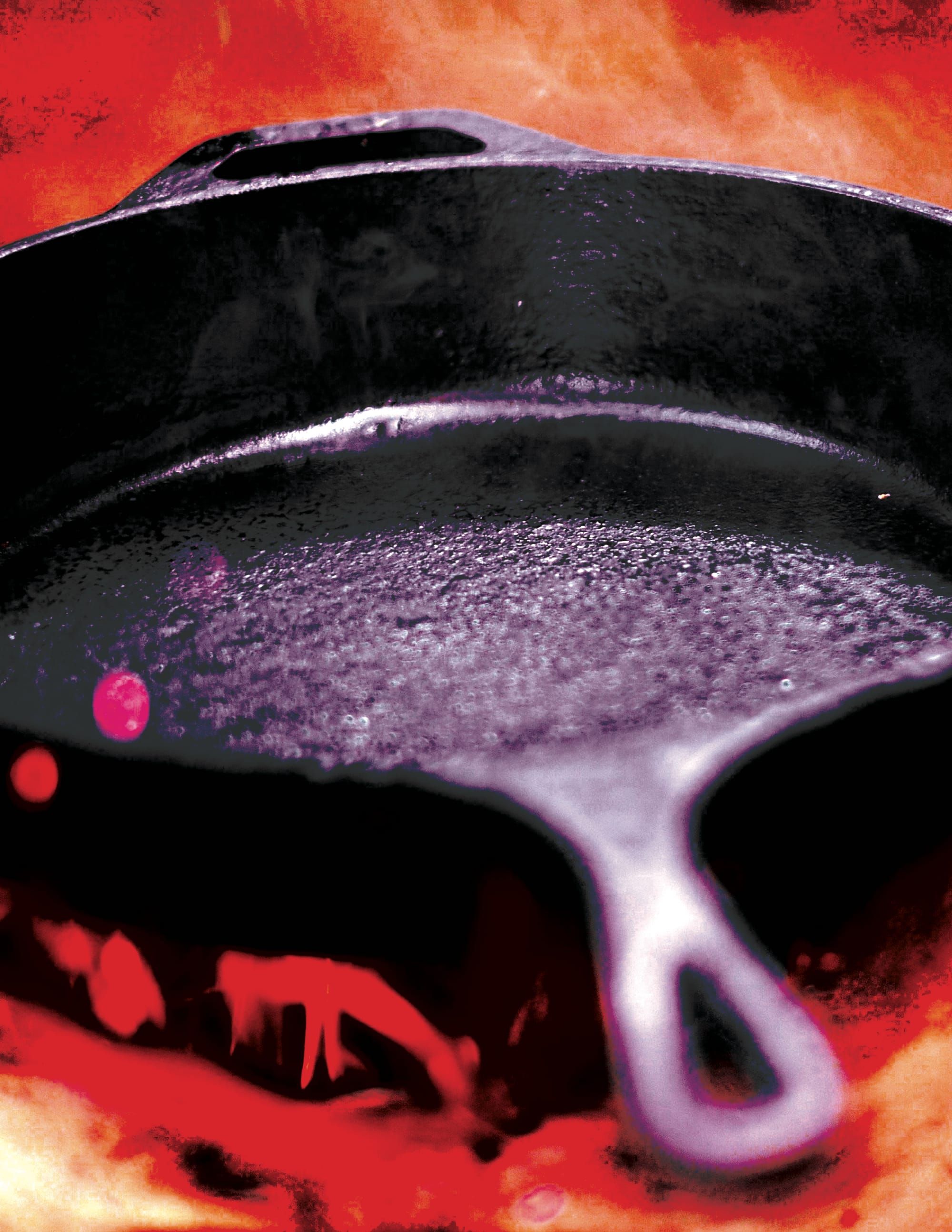
Written By: Graham Smith
The town is Rooktrack. Usually missed on a hairpin turn and hardly worth the trouble of turning back for, this is the town that spent its twilight years in crisis mode.
During the last summer I lived there, a thick haze sank into the streets like a dead cloud, sticking to skin and windows. Nothing grew. The reserve was dry. Tom Cross, who once sat behind me in applied math and called himself mayor, fumbled the budget like he fumbled the winning touchdown senior year. It’s the kind of place you’re either born into or got trapped in. Maybe you thought you’d only be staying a short while.
I used to work at Moonspark Cookwares, an iron mill located on the northeast corner of town. Now, my work is scattered across the dry lawns of Rooktrack. I use metal to build things—for neighbors, for myself. Give me a week and I can shape up just about anything: fences, iron door pulls, beam straps, utensils, truck hitches. One time it was a cherry-colored fox in Neil Warner’s garden. The ones I enjoy most serve no real purpose.
Every year, Rebecca and Pat Winchell commission me to add to their wire angel family.
Whenever they had a new baby (they’re on number six), they called me to weld another cherub face onto their creepy metal chain. And so I did.
Jobs were hard to come by those days unless you left town, so I counted myself lucky to stay busy, even in the slow seasons. The biggest thing I was ever asked to make came from Mayor Cross himself.
He showed up at my home on a balmy Tuesday in August. My wife, Flora, quickly found an excuse to leave. Like many Rooktrack residents she truly hated the man, and like the best people, she knew the length of her own temper.
That day Cross told me he wanted to build something designed to attract tourists.
“I figure if folks are barreling down the turnpike, we gotta give them something that’ll make ‘em hit the brakes and gawk at. Catch my drift?” he said.
I nodded, but didn’t say much. I didn’t feel like being interrupted. “Imagine. The world’s largest…something. We could get a world record out of this. Just imagine it. Rooktrack in the record books! Do you have any ideas?”
“None spring to mind,” I said. I tried to follow his babbling. But all I could think about was that he was still wearing his shoes in my house. He seemed a little wired and out of sorts that morning.
“That’s alright. After the town hall meeting we can set some time aside and discuss. Would you be alright with that?”
Again I nodded—but I managed to get one thing off my chest.
“Maybe it can wait, Tom. A lot of folks are already angry at you. This might push them over the edge.”
He simply smiled and shook my hand. That was the beginning.
Tom was a decent guy—a humanitarian at heart—but a lousy leader and an even worse negotiator. He dug us into a $1.5 million hole and still couldn’t stop the Province from slashing services. That previous winter, there was no garbage pickup. By the following spring, everything we depended on—road maintenance, fire suppression—was gone. You could set a building on fire downtown and watch it burn to ash before anyone showed up.
“You’ve made us a joke, Mayor Cross!” a man shouted during the town hall meeting later that night. About 80 people attended, with 40 more on Zoom—a quarter of our population. It became entertainment in a way, seeing Tom dodge question after question, never outright apologizing, but begging for mercy with those sad, hangdog eyes.
I was sitting there with my friend Shelby, watching the temperature rise in the room.
“We’re upset,” the man continued.
“Why aren’t you paying the bills? This is what you’re all hired for. The council and everybody. You’re supposed to be paying the bills. You’ve raised property taxes 26 percent since my wife and I moved here last year. You don’t tell us what your plan is, and when you do, we can’t help but hate it.”
Murmurs of agreement sounded off. The man sat down and Tom cleared his throat. He was in a flop sweat, looking around the room at nobody in particular.
“My friends, I appreciate you all coming tonight and voicing your concerns. You’ll be happy to know that we’re working with the ministry of municipal affairs to dig us out of this hole. In two weeks’ time we will be granted a $300,000 fund as a buffer while we hang onto essential services.”
The room filled with groans. Tom’s next few words were drowned out by name-calling and a rhythmic chant that started from the back.
“We don’t trust you. WE DON’T TRUST YOU. WE DON’T TRUST YOU,” the mob roared.
A young woman in a hijab approached the microphone. The angry chorus politely rested as she spoke.
“That $300,000 might as well be on Mars if it’s in your hands. Do you even have a budget proposal that doesn’t include raising taxes again? We need an audit and we need you out of office before we can even look at this fund.”
Shelby looked at me and asked if I was hungry. I wasn’t but I wanted to visit Flora at work and let her know what she was missing. Besides, there’s only so much secondhand embarrassment a man can take before he has to look away.
I hoped to God Tom knew where the back exits were.
We left the meeting early and drove to the Pink Star Diner. Flora was in her third week as manager, after the former owner, Isa, passed away. Within days of taking charge, it was clear that Flora was much more than just a stand-in. She made deals with the supplier to bring in better produce and fresher cuts while staying mindful of her capital.
The boldest change came when she cut the dinner menu entirely. Breakfast for dinner was the norm in Rooktrack and not a living soul that lived there wanted it any other way.
Once Flora took over, the Pink Star quietly became the last profitable business in town, with Moonspark shouldering the rest of the burden.
Shelby ordered the chorizo hash over scrambled eggs. We both drank strong black coffee—hot enough to burn. Outside, headlights slid past the big front windows as more folks from the meeting trickled in.
The first face I recognized was Stephanie Ross, town gossip. She had a shrill, sing-songy voice and a smile too big for her mouth. She’d be an awful pain if she wasn’t always right.
“Cross is gonna run again in the fall. He’ll wait until he’s in the clear — then watch! Taxes will shoot up twenty, twenty-five percent. That grant will shrivel in his hands,” she told a couple sitting behind us.
Before the paper hit the porch, Stephanie gave you the lead. Her version of it, anyway.
Through the kitchen pass, I could see Flora in motion—talking with staff, training new hires, adjusting the specials board. My wife was spinning like a top to keep everything on track. She glanced over once and smiled, then straightened her spine and turned away.
I was reading the paper as quickly as I could before the place filled up and became another town hall.
“This town needs a sound investment,” Shelby said. “Like a casino.”
I looked up from the paper.
“First things first. We need to stop swimming in trash.” I tapped the front headline.
ROOKTRACK COLLAPSING.
My finger grazed the byline.
STREETS COVERED IN GARBAGE.
“Oh god, all this attention.”
“I know.”
“Sandy wants to leave, but there isn’t a hick’s chance in Harlem we can sell now. No money in it. We had an argument about it the other night. Then she started telling me things I said a few years ago. Shit, I can’t remember what colour socks I put on this morning.”
“What things?”
“Moving here. How it was all my idea. Not how I remember it of course, but I wasn’t sure enough to fight back. That’s why I’ve started a notebook of all of our arguments. So I can catch her in a lie one of these days.”
“I gotta be honest, Shelby, it sounds like things are pretty rocky.”
“Yeah, this place isn’t what I remember.”
I stood up from the table and walked to the front counter. I said hello to Tiffany, who started working after school to pay for college, and pointed to the menu.
“What’s popular today, Tiff?”
“A little bit of everything, I guess. We got one called ‘The Lumberjack Skillet’ that folks seem to like. I haven’t had it though, too much meat.” She scratched her nose and remembered something.
“Oh! We had a friend come by today.” She giggled.
“What kind of friend?”
“I promised Flora I’d let her tell the story. He was a really cute customer. Watch out Ford, he took a liking to your lady.”
Where I was then, a few weeks shy of forty, I didn’t fret much with jealousy. Those first few years when I was dating the prettiest woman in Rooktrack, I had some insecurities.
Not anymore. It didn’t even enter my mind that her new friend was human. Probably just a hungry dog that snuck behind the counter to lick the bacon grease off of her fingers.
Tiffany gave me my change and I redirected the conversation.
“Were your folks at the meeting tonight?”
“They watched from home. Dad is gonna lose his job regardless of the fund.”
“We don’t know that yet.” I don’t try to make a habit of lying to teenagers, but this wasn’t the time to be candid.
Her dad was a thickheaded bull of a man, working in the overflowing dumpsite outside of town. Mounds of trash stretched across the lakeside, with fewer and fewer collectors to depend on.
The mile-long trash wall became an oasis for vermin. It attracted gulls and rats and gave off a stench that was hard to bear, and even harder to describe. “Satan’s litterbox” was my best stab at it.
I dug into my wallet and settled up. Flora locked eyes with me through the small kitchen window. Her hands were covered in grease and filth so she signaled me in with her head.
“What did he say to you?” was how I remember it started. Flora was no fan of Cross, as a business owner and as someone with a working set of eyes and ears.
“He wants a tourist attraction.”
She scoffed and began washing her hands. I stuck to one corner, staying out of her way.
“That man is like a stupid cat. He loves to make a mess, but hates the sound of the vacuum cleaner. Tiffany’s dad is probably getting sacked tomorrow.”
“Yeah. It’s terrible.”
Flora set down a tray of cold onions. Then, flushed with heat, she gave me a sour look. I knew what she was going to ask, so I got the drop.
“I’m doing it. And before you say anything, I don’t think it’s best for the town. I don’t like the idea of blowing money on a big, stupid statue. But it’s the right move for us.”
“We’re fine without it.”
“For now, but you should have been there tonight. People are stuck, and the ones doing well right now are pretty soon gonna just be getting by. I think with this money we can leave before it gets really bad, Flora.”
“Order on 27, greasy Monday!” Tiff shouted from the front.
Flora looked around. Ricky, the line cook, had gone outside for a smoke. Without a word, my wife ignited the blue flame on the grill and set a heavy cast-iron pan down on the grates. Soon she had ham steaks sizzling next to shredded hash browns. I felt a clawing near my leg. An almost imperceptible tug. I looked down while Flora continued cooking and found nothing. The kitchen lay still other than the pall of smoke rising from the grill.
“I trust you, Ford. Not him. I don’t know what I’m gonna do about the Star.”
“It can wait. This is gonna take some time.”
“What are you going to build?”
“I haven’t decided.”
“How about a fifty-foot Tom Cross getting eaten by a hundred-foot fox?”
“That’ll lift some spirits.”
I inhaled the smoky scent of meat braising in oil. I was finally hungry, but I didn’t want to order until the rush died down. Flora flipped the ham to sear. In the bubbling pool of brown liquid I saw the Moonspark Cookwares emblem on the bottom of the skillet.
Just as I asked Flora to add some strips of peameal bacon, the clawing came back to my leg. This time I saw the source. A red, short-tailed squirrel circled my leg and raced under the grill.
“Shit!” I yelled. My brain sent a jolt to my legs and my back hit the wall.
Flora spotted him and laughed at me. She had this hoarse laugh that reminded me she quit smoking only a few weeks back.
The squirrel wasn’t copper-coloured, or the reddish-brown you normally see clambering the trees of northern Ontario. This critter was bright red. Electric red. When he darted from under the stove and into the sink it was like a streak of fire spinning from a torch.
He sniffed at the strainer in the sink. If there was food caught in it, it was probably too soggy for his liking. He settled on a damp over-easy egg yolk—a tiny piece—then leaped to the flat edge of the sink.
His chubby body flung across the room, landing perfectly on the open windowsill. He was fat, but he wielded muscular little squirrel arms. It was a miracle of evolution, centuries of tree-climbing escapades passed down from his bushy-tailed ancestors, all so he could steal a few bites of egg from a diner sink.
I closed my mouth and looked back at Flora. She turned back to the stove and removed the ham from the heat, its surface richly browned.
“That reminds me, I made a new friend at work today.”
From Graham Smith:
Not a slow burn, but a simmer!
The Skillet tells the story of a small town riddled with debt that bands together to build the world’s largest… you guessed it… skillet. But as greed and ambition sets in, the new attraction becomes much more than a magnet for tourists. Those who love the Skillet will be well fed. Those who oppose it will find themselves fried, boiled, or baked in an iron grave. Think Lord of the Flies with a better breakfast menu, cooking beneath a relentless Canadian sun.
I originally conceived this story as a radio play of all things. Imagine that sizzling sound in your ear while you’re out on a jog. Yum. But as I got back into short fiction, I realized The Skillet belonged in narrative form. Something about the detail, the characters, and the madness made it the perfect excuse to write my first novella! Maybe one day you’ll hear the sounds of bacon frying—or flesh cooking. The biggest influence on the story was, unfortunately, something rooted in reality. The Northern Ontario town of Fauquier-Strickland found itself in a financial crisis throughout 2025. Watching the story unfold, and seeing a town of fewer than 500 people struggle to find a way forward, was incredibly upsetting and disturbing. Services were slashed. Property taxes skyrocketed. The mayor made some poor decisions, and the town seemed to be circling the drain. As of now, the province has provided aid, but it remains a long road to financial recovery.
The idea of an Ontario town facing an emergency like this unsettled me, and it led me back to an old idea—this time with a more grounded setting. Some of the characters are virtuous, some are villainous, and some are just people: quirky, imperfect, and trying to get by. My goal is to release a new chapter every couple of weeks on my Substack, allowing readers to follow these characters as they try to make the best of a bad situation.
If this story makes you laugh, terrific. If it makes you scared, outstanding. But if it makes you hungry, then I know I’ve accomplished my goal.
Breakfast is served!
Follow The Skillet: substack.com/@grahambutworse
Graham Smith is a writer and filmmaker from St. Catharines, Ontario, now based in Toronto. A lifelong fan of horror, his work is heavily influenced by genre literature and pop culture, both classic and contemporary. He draws particular inspiration from authors like Lisa Tuttle—especially Nest of Nightmares—Eric LaRocca, Joyce Carol Oates, and, of course, Stephen King.
After a decade of writing scripts for fellow filmmakers, Graham is currently editing his directorial debut short film, After You Squish Them. He is also working on his first novella, The Skillet, with plans to complete both projects in 2026.
Follow Graham on Instagram: @graham_butworse
Your link has expired. Please request a new one.
Your link has expired. Please request a new one.
Your link has expired. Please request a new one.
Great! You've successfully signed up.
Great! You've successfully signed up.
Welcome back! You've successfully signed in.
Success! You now have access to additional content.