The Last Woman

Written By: Holly Eakins Deep in the hills of the west, nestled into the thick, heavy heat of the land, there was a village
Written By: Holly Eakins
Deep in the hills of the west, nestled into the thick, heavy heat of the land, there was a village.
At such a distance from the city, there was not much to see. Only farm labourers dared to reside this far out in the deserted yellow. Huts and crude stone houses jutted from the dusty hills. Wooden posts reminded visitors that there were once animal pens, perhaps the sensible division of land. Tools scattered the desert; spades, hoes, axes, machetes.
It was quiet, as desert villages often are. Nothing to listen to but the buzz of insects and the shifting of sand. And the heat, with its rippling energy. Many a men were said to have gone mad, taking out to the sandy plains beyond the hills. The heat had a sound, the westerners would say. Like a thickness in your ears, like a finger blocking your eardrum. Like plunging underwater and not daring to breathe.
Once, it was a successful village. Now it was barely a home.
Heat sticks and stays. Like a sandstorm, in rolled the heat, larger and deeper than before, and every year worse. Sweat poured from backs and foreheads; crops withered in the fields; petals and seeds and fruit shrivelled and dried. The ground was plagued. Streams ran dry. Soil turned to sand in thin, shaking fingers. Everything wasted away.
Water had not returned to the village since. Riverbeds left dead, dehydrated fish. Plants died on the banks. Water dwindled, then slowed, then stopped. The livestock went first. Then the pets. The plants, already dead in the sun. Then, below, the dirt itself: mouthfuls of stones and fistfuls of sand.
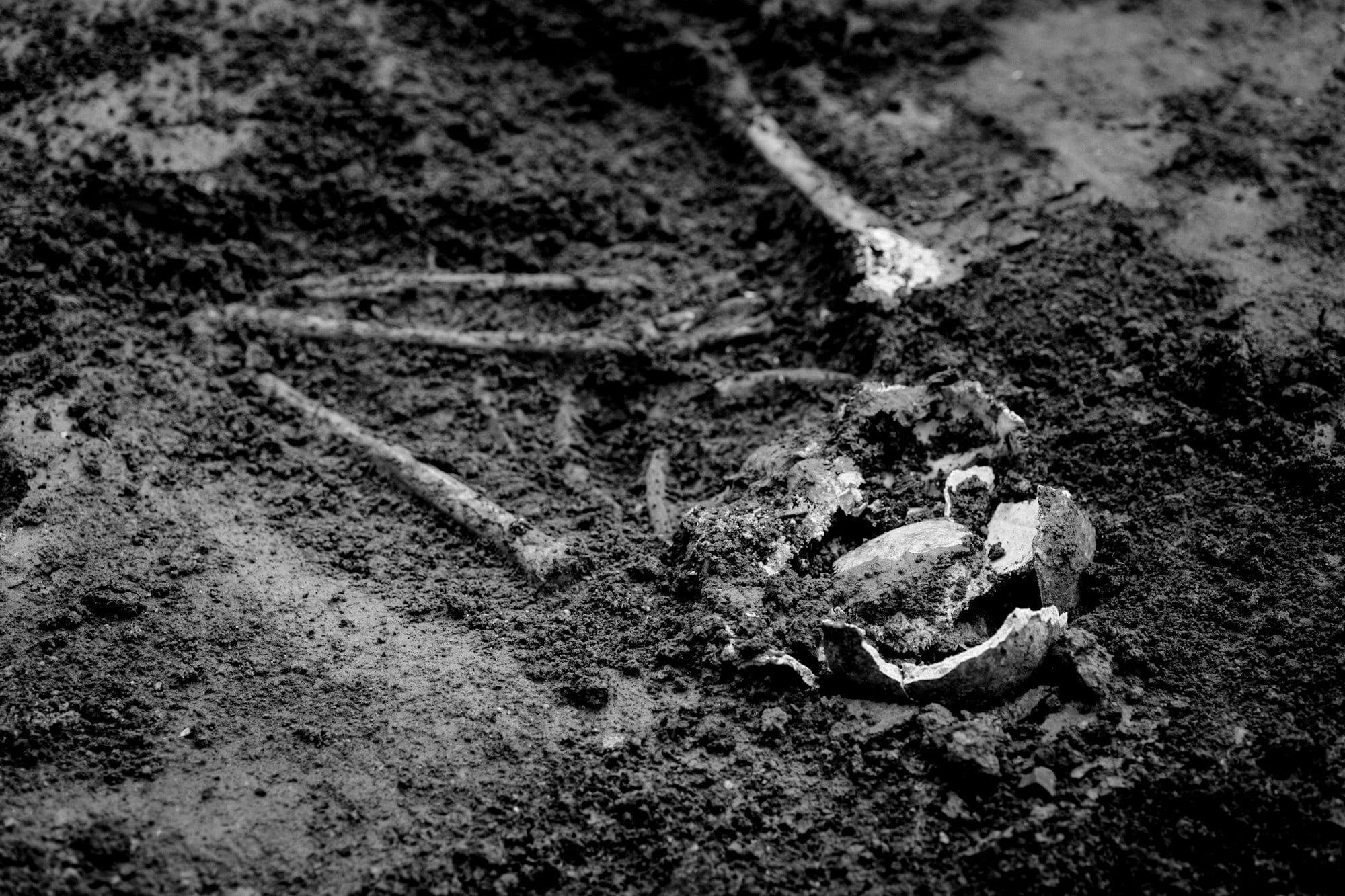
Bones laid scorched in the dust. White, powdery. Gnawed.
Thitu remained. She sat on the highest of hills but did not see the view. To her right were three of the few things she had left: a small campfire, a hunk of meat, and a shovel. To her left was a pile of charred bones.She wiped her dirty face and took another bite. The dust had always infiltrated everything, even when she had still had water to clean with. Her eyes, red and rimmed with the grey, stared, unblinking. Another bite of meat. The last meal for the last woman in the west.
Of course it would not have lasted forever. But Thitu had not planned on being there for that day.
Here she sat on the hill, the brownish meat an uncomfortable weight in her hands. She felt she was the loneliest person in the world. Perhaps she was.
When she finished eating, she would go east. The longer she had survived, the longer this miracle had continued, the more she had known that she must. East, there was food and water and shelter a plenty. Work. Homes. People to follow and be led by. Here, humanity had died a long time ago.
She looked to the hill below, at the little wooden markers that denoted graves. Her father had dug each one. There were dozens, no, more; she couldn’t count reliably from here, and not when she was so hungry. He had taken the shovel, the one with the chip on the tip, and carefully removed the soil. The people that now laid beneath the dirt—well, Thitu had known each one. Hunger had set in deep, and people were willing to do anything to feed themselves. Her father had not liked that. He had wanted to give them one final show of respect.
They didn’t have burial rites out here in the country. But he had left flowers at the graves—dried ones, of course, the kind that were made for tea. He had found them pressed in her mother’s books and couldn’t bear eating them.
Another bite of meat. Each delicious piece sent Thitu swaying, praising.
She did not know how she looked anymore; perhaps that was the most startling part of it all. She remembered her long, thick hair and the rich colour of her skin, but it must have been months since she last saw her reflection. When the water left, she could no longer stare at herself in its sheen. And when she started to pull her hair out, her father took their one mirror down to the old paddock and shattered it. She remembered sifting through the sandy dirt to find it, but he had taken to it with a hammer to ensure that she could not look. A cruel mercy, perhaps. Yet she desired to know. Were her eyes still as bright as the moon shimmering on water? Did her skin still fold and crease in the same ways when she smiled? Could you see colour in her skin, or just the jutting outlines of her bones? Did she look as gaunt and as hollow as she felt? Did she look like she was dying? Did she look like she was already dead?
It didn’t matter now. Thitu wiped her messy chin with the back of her hand and dropped another bone into the pile beside her. A rib, she supposed. She had never seen the inside of a body—animal or human—until the drought, until the famine. She let a shaking hand feel her own rib beneath her papery skin. It seemed to match the bone she was looking at.
A sudden lurch of sickness surged over her but she held it down, her fingers splayed across her mouth. How dare her body even think of vomiting this final meal? She could not travel on an empty stomach.
Her mind liked to play tricks on her, as minds often do. It told her malicious untruths; fed her malicious manipulations. Sometimes she believed them and bent to press her ear against its words. Sometimes she understood its irrational mumblings and moans. Her mind spoke to her now, and it said,
Do not go.
Why? she asked.
Your family, your friends, your lovers, her mind said. Your childhood, your strength. Look at the meat in your hands, dripping with the sacrifice of another. Everything you knew died here. Why not you?
Thitu shook her head.
Would it not be easier to die in the comfort of home? her mind said. The desert is a cruel, unforgiving place. You may not make it.
She swallowed, the meat stuck in her throat.
But what if I do?
Thitu took a final mouthful of meat, dropped the final bone into the pile. As she stretched, she looked out at the expanse of desert: at the endless roll of yellow-brown sand, at the distant horizon, towards clouds that surely decorated the sky in a place much further than her understanding. She took stock of the few possessions in her pockets: a knife, an empty carafe, and a ring that could pay her way to the east. Around her neck hung a chain and she fingered it as she watched the campfire burn out. Then she picked up the shovel, the one with the chip on the end. She needed to bury her father’s bones.
Holly Eakins is an English writer based in St Andrews, Scotland, where she is finishing up an MLitt in Creative Writing. She primarily writes horror, fantasy, and speculative fiction, and is currently working on her debut novel.
Your link has expired. Please request a new one.
Your link has expired. Please request a new one.
Your link has expired. Please request a new one.
Great! You've successfully signed up.
Great! You've successfully signed up.
Welcome back! You've successfully signed in.
Success! You now have access to additional content.